Showing posts with label leather. Show all posts

Tuesday, October 20, 2015

Strapping new arms

IMG_0561
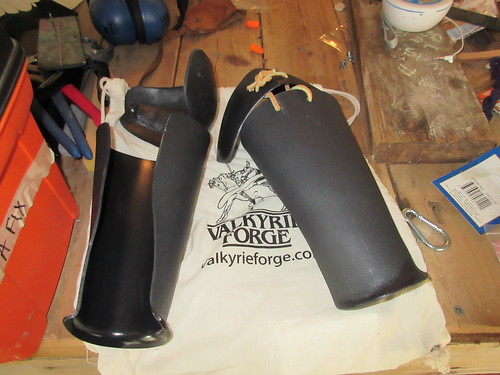
At Gulf Wars I picked up some new lightweight plastic arms.  I needed to strap them, so I thought that I would share with you how I got it done.
IMG_0562
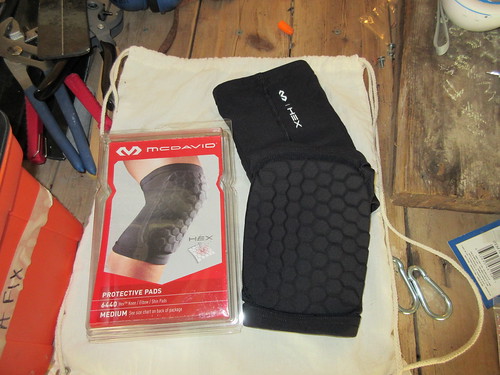
First, here is what I am putting under my elbows.  The sleeve is fairly tight and I am using it to keep my arms in place.  The elbows are tied directly to the sleeve.
IMG_0564
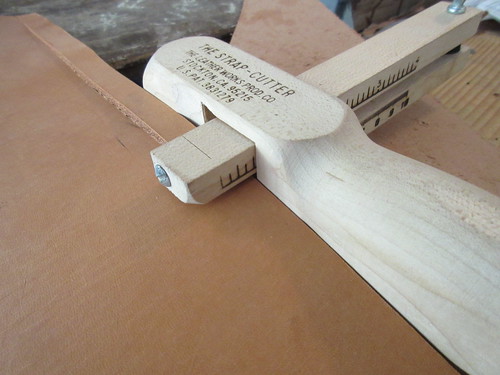
Here is my trusty strap cutter and the giant chunk of leather that hangs out in my work area.  I've got the cutter set to the correct width for my buckles.  I'm cutting four straps - two for each arm.

IMG_0566
Here are some freshly cut straps and buckles.  It's a start.
IMG_0568
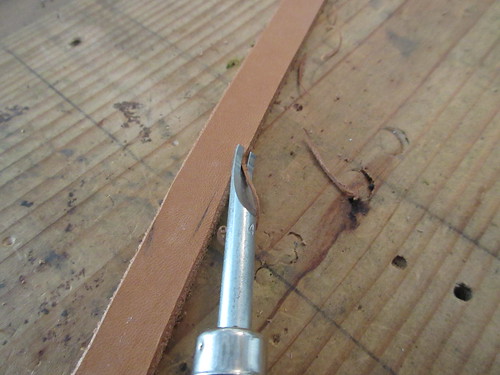
I'm fussy about raw edges on leather, so here I am beveling the edges to smooth things out.
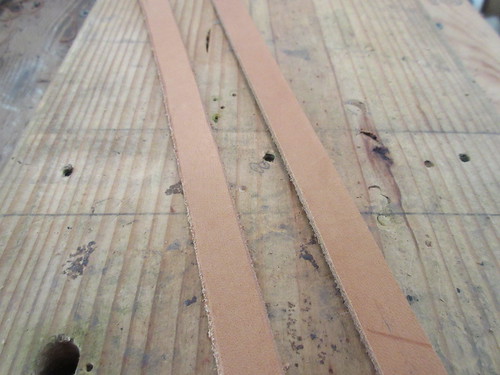
IMG_0570
Compare the beveled edge on the left to the raw edge on the right.
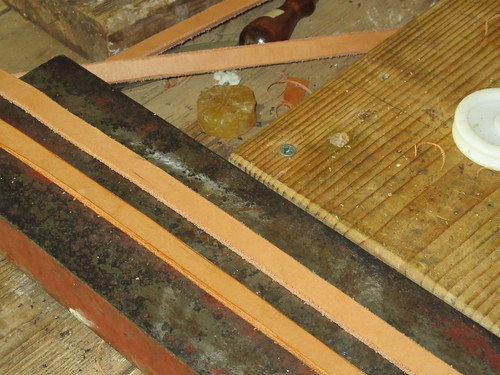
IMG_0576
The left strap has been beveled, smoothed, and waxed.  Now you can really see the difference between the nice strap and the raw edges.
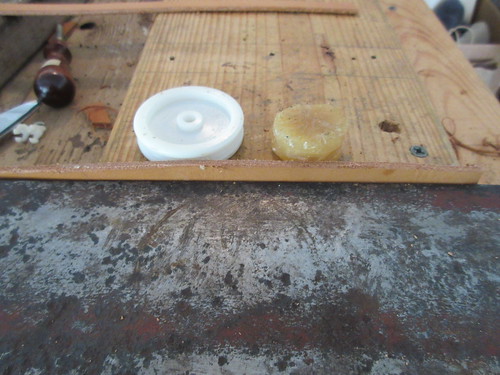
IMG_0577
Here are my trusty tools: edge slicker and beeswax.  I used my anvil to hold the strap in place while I worked the edges.
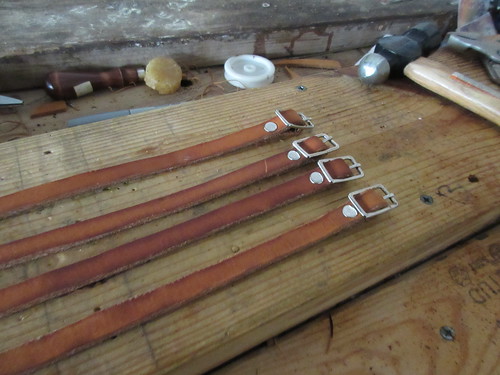
IMG_0580
After I finished the edge work, I oiled the straps with some neatfoot oil.  The oil will protect and condition the leather.  As an added bonus the oiled leather looks nicer.  I've also riveted in my buckles on one end.
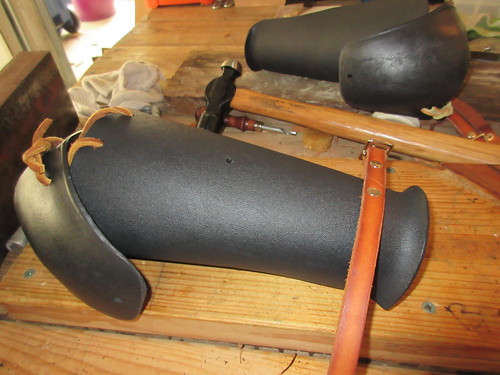
IMG_0581
I drilled holes for the initial placement of the straps.  First strap has its first rivet.
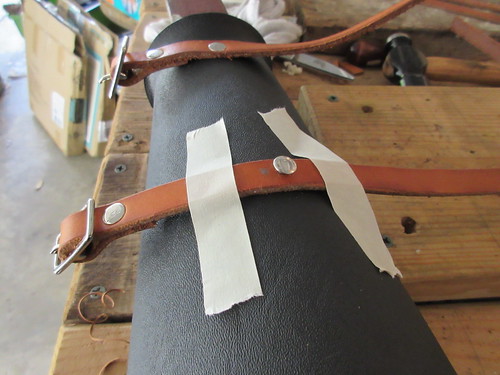
IMG_0582
How do you keep things still for the hammering?  Tape!
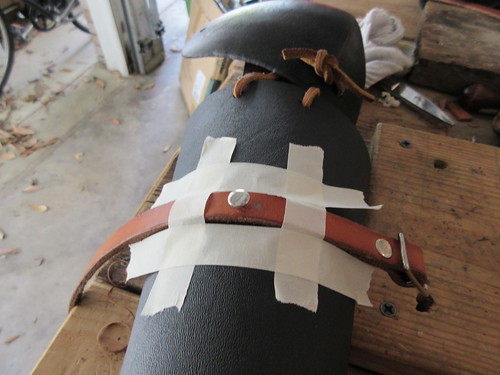
IMG_0583
Needs more tape!  I don't want the strap wiggling on impact.
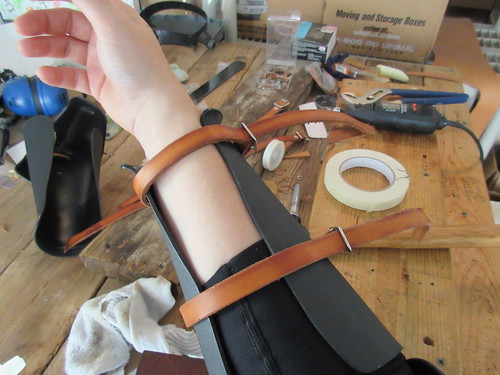
IMG_0584
The straps are riveted in and ready to punch buckle holes.
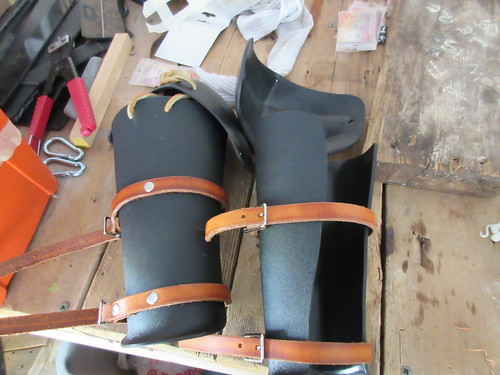
IMG_0585
All the holes are punched and the longer edges are trimmed off.  All done!
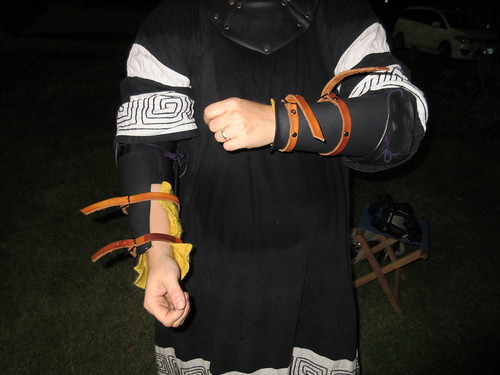
IMG_0595
Here are the arms with my gear.  The yellow is some wool felt for extra padding.  The purple lucet cords tie the elbows to the arms and point the elbows to the sleeve we saw in the second picture.
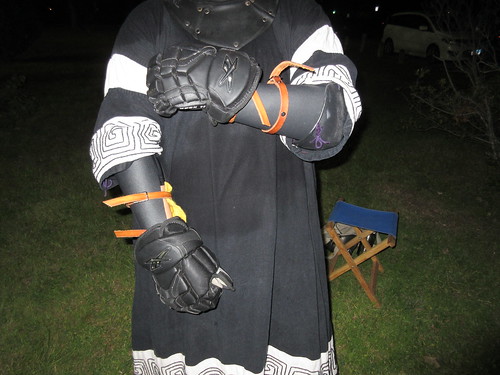
IMG_0596
Gloves on and we are ready to go!
Monday, July 28, 2014

Actual rivets

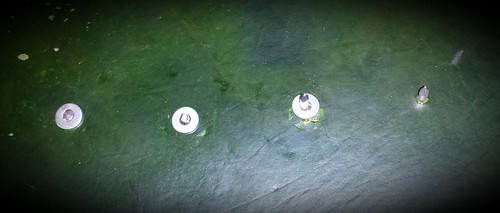
Pretty rivets were a fail. After a few tests, they just didn't hold up to abuse. I decided to quit looking for something prettier and go with the tried and true combination of roofing nails and washers in order to get the job done. Sir Maelgwyn taught me this approach when we were working on my coat of plates and now I share it with you, my dear readers, in the picture below. Riveting the splints in: right to left 1. Plain roofing nail 2. Clip nail short 3. Add washer 4. Nail hammered and shaped

The sequence is from right to left for no reason other than that is the angle that I took the picture.

  1. First make a hole an pop the nail through.
  2. Slide the washer over the nail. The tighter the fit on the washer, the less rattling around and jumping you get. This washer is probably too loose, but it's what I had on hand.
  3. Clip the nail fairly close to the washer. You don't want it flush, since you need some metal to spread out for the rivet. I've got some handy metal shears for this that work well and help you develop your forearm strength.
  4. Hammer down the nail into a nice rivet. You can use the flat part of the hammer to spread the metal and the rounded part to shape it into a nice even dome.
And finally, here is progress on the legs. Progress

Wednesday, June 4, 2014

Riveting news!

Test of decorative rivets

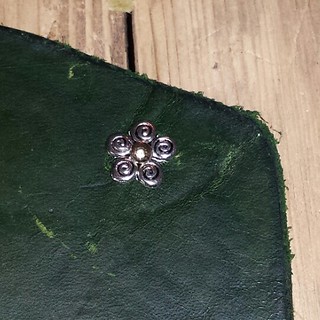
I've been looking for some pretty rivets since the planning stages of my armor upgrades.  I want something pretty, but don't have the budget for the super nice historical replicas.   These are my favorite thus far.  They are cheap and if you squint really hard, they look kind of rose or flower-ish.   The metal is a decent thickness, so they should hold up ok.  I think that they will look fairly nice.  I am almost at the riveting, so unless I find a better option before I finish drilling holes, these are it!

Thursday, May 29, 2014

Pouncing Armor!

Lining up the splints on my leg armor.   They have now been sized and ground smooth

When we last left my leg armor, I was getting the splints together.  After cutting them out on the Beverly shears, I handed them off to Master Jovian.  He was kind enough to grind the edges smooth for me.  Above you can see the now not-jagged splints ready to go.

Contact cement to hold things together while I do the riveting

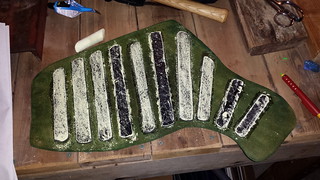
I hate getting rivet holes to line up and dealing with plastic and leather shifting about, so I have decided to eliminate the problem with copius amounts of contact cement.  The contact cement probably wouldn't survive fighter practice, but it will hold things together long enough for me to drill and rivet with minimal fuss.  Here is my sticky, gooey progress.

All glued together!

Once the contact cement cured, I placed all the splints in their proper position.  This felt a bit like a surgical procedure, since one false move and the plate is stuck forever.  Well, probably not forever, but there is no wiggle room with dropping the plates.  Contact cement does it's job well and the one splint that I tried to re-position would not budge even the slightest.

Some of my projects have extensive plans that go into great details.  Many have "the magic happens here" steps that lead to creativity, innovation, and occasionally weeping.  For some reason, my magic step here was "do the other leg".  Since I had done all the plate positioning directly on the first leg I didn't really have a pattern to work with.  What to do?  The answer was prick and pounce - armor style!

Sidewalk chalk for copying pattern

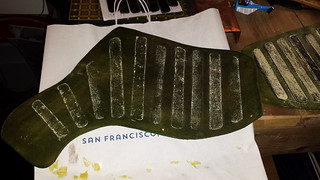
I borrowed my son's sidewalk chalk and used it to make maximum mess on the splint plates.  The plates with the texture side up did a much better job of being chalky, but the smooth plates did adequate.  When all the splints were thoroughly dusted, I carefully lined up the two pieces, flipped them over, pressed down carefully (no shifting!), and then removed the chalked piece.

Copying success!

The result was a magnificent success!  I was hoping for it to work well enough for a fiddly approximation, but the copy was perfect!  After the surprisingly effective pattern transfer gluing the second leg was a breeze.  

Tuesday, April 8, 2014

Leg armor progress

Legs are partially assembled

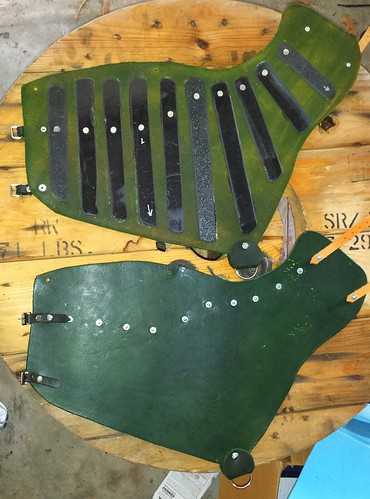
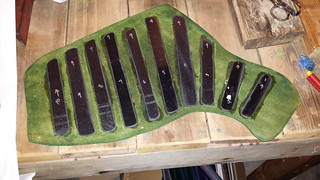
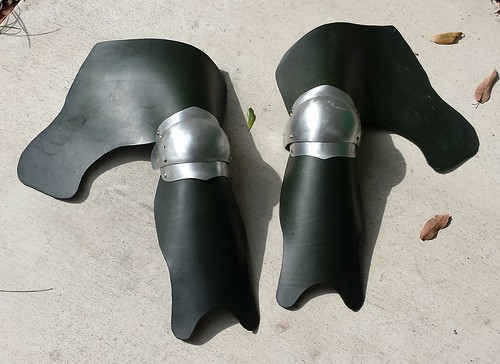
I've resumed work on upgrading my armor, starting with the legs that I was working on. The pieces had been previously cut and dyed, and then laid on a shelf where they weren't doing much of anything. So, this weekend I decided to make some progress. I punched rivet holes and gave them a nice coat of neatsfoot oil. The oil darkened the green dye a bit, but greatly improved the handling and feel of the leather. In the picture above you can see the legs partially assembled with the knee cops.

beverly shears and kydex

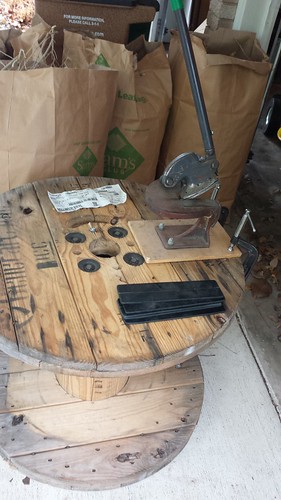
I borrowed some beverly shears from a friend of mine and got to work cutting out plates for splinting the thighs. I've mounted the shears using some C-clamps onto a wooden spool that I picked up for $5 from the electric company. The spool is heavy enough to be sturdy, small enough to fit in the back of my micro van, and the round shape makes it relatively easy to move around. This setup worked really well and I got all the plates for the thighs cut out.

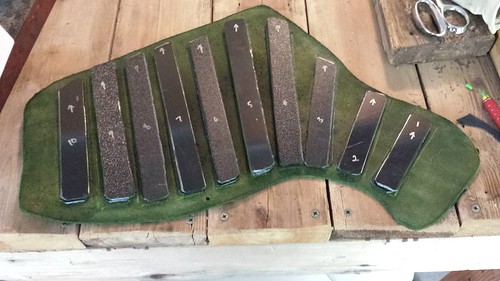
Thigh armor splints cut out

And here is what two sets of thigh splints look like after they are pattern drafted, cut, and laid out. I still need to grind the edges, since they are a bit rough in places.

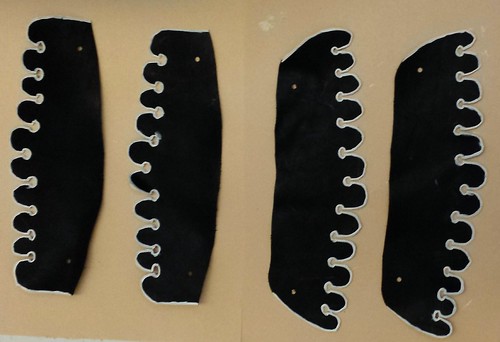
Dagging edges are painted

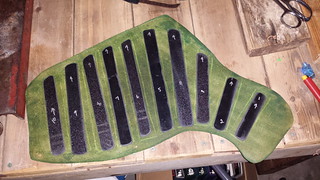
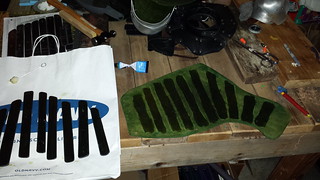
What armor kit would be complete with out some fashionable bling? Ok, it's 14th century fashion, but still - fashionable. I pulled out some thinner black leather and cut dagging strips for my knee cops. The black helped contrast against the green, making it appear less dark. I decided that the contrast needed a bit more zing, so I painted a white border around the edges of the dagging. It looks even nicer than I imagined! As an added benefit the paint sealed the leather on the edges and made the dagging cuts look more tidy.

Saturday, June 1, 2013

C-belt finished

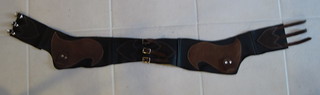
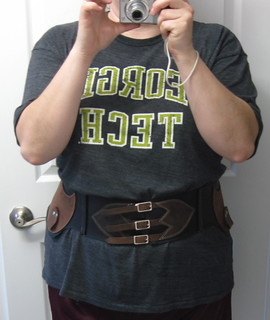
C-belt is finished! A few modifications made it feel more secure and fit better. The neatsfoot oil has darkened the brown leather that was attached, and after a week or so the new leather will probably darken too. The color contrast is still enough for a pretty pattern though. Finished c-belt Here I am wearing it! Very comfortable and ready to hang some legs on. Front view of finished c-belt

Friday, May 17, 2013

New C-Belt

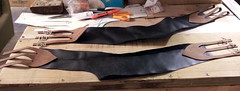
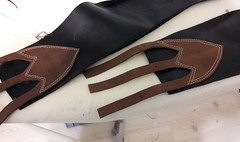
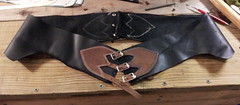
I've been pondering upgrading my armor for a while now and have a list of stuff I'd like to do. I've recently moved, which gave me the chance to inventory my collection of random craft stuff. This week I found enough leather bits to start putting some stuff together, so I decided to begin with a new c-belt. I've been working on design and planning with my randomly shaped scraps here and there most of the week. Here are the bits all nice and cut out. C-Belt progress The black leather is a lighter weight leather and the brown is a bit heavier weight. I had to oil the black leather since it had been in various garages for quite some time. I have an old school metal sewing machine, so I can drop it down to a very low speed and sew leather. I've got some nice leather needles which look like tiny daggers. At first the sewing was a bit rough, but I rubbed some of the leather oil on the needle and then things went quite nicely. Appliqueing leather is fairly different than the work I've done with fabric and it was challenging. I managed to make it through without any catastrophes. No do overs with leather! C-Belt progress Finally, I riveted in the buckles and finished them out. It's starting to look pretty nice. The screw rivets probably wouldn't have been my first choice for the project, but my theme for a while is going to be using stuff I already have and I had a handful of these left over. I am going to keep rummaging through things to see if I find some rivets I like better. C-Belt progress Next on my agenda will be adding the leg harness mounts over the hips. I'm going to continue to strategically use the brown leather to reinforce the black leather and hope that it is strong enough. I used some older measurements and I think that I'm going to have to take in the front a little. I'm going to let it sit overnight and think a bit on what to do next.